The Anatomy of a Tuesday Evening
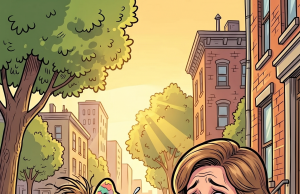
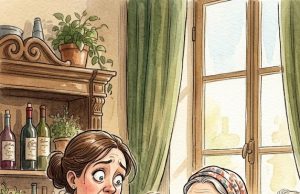
The disintegration of my marriage did not arrive with the thunderous roar of an argument or the dramatic slamming of a heavy oak door, but rather with a quiet, devastating avoidance of eye contact. It was a Tuesday in early October, a day distinguished by the kind of crisp, autumnal air that makes the indoors feel like a sanctuary. I remember the scent of the kitchen vividly—the savory, grounding aroma of onions and rosemary simmering in a pot of soup on the stove. Upstairs, our daughter, Maya, was engrossed in a school project, a miniature replica of the cosmos that had resulted in a thin layer of iridescent glitter coating her bedroom carpet.
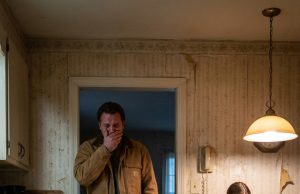
Arthur stood in the threshold of the kitchen, the light from the hallway casting his shadow long across the linoleum. He hadn’t yet removed his suit jacket, though his tie was loosened in a way that suggested a man who was already halfway out of his current life. He was looking at the screen of his phone, his thumb moving in a restless, mechanical rhythm, before he finally spoke.
“Vivienne,” he said, his voice stripped of the warmth that had once defined our shared language, “this just isn’t working anymore.”
I didn’t turn around immediately, my hand still gripping the wooden spoon as I stirred the broth. “What exactly are you referring to, Arthur?”
He let out a sharp, exhaled breath, the sound of someone who had run out of patience for a performance he no longer wished to give. “Our life together. This marriage.”
The words landed with the weight of stones dropped into a deep well. For months, I had been telling myself that Arthur was simply buried under the pressure of his career, that his sudden irritability and his habit of shielding his phone from my view were merely symptoms of exhaustion. I had trusted our fifteen-year history more than I trusted the hollow feeling in my chest whenever he answered a simple question about his day with a wall of silence. I had convinced myself that love was a series of seasons, and that we were simply navigating a particularly bitter winter.
“I think we should move toward a formal separation,” he continued, finally looking up but focusing his gaze somewhere over my shoulder. “In fact, I’ve already consulted with a legal firm.”
It was the word already that fractured the air in the room. It transformed a potential conversation into a settled verdict. I turned then, looking at the man I had built a life with, and I saw only a stranger’s clinical impatience. He didn’t want a resolution; he wanted an exit strategy that wouldn’t damage his professional reputation.
The Girl Who Watched the Clouds
The months that followed were characterized by a chilling, bureaucratic efficiency that I found more humiliating than the betrayal itself. Arthur moved out of our bedroom and into a furnished apartment downtown, and soon my mailbox was filled with documents that attempted to translate fifteen years of shared dreams into a cold division of assets. It was remarkable how quickly a home could be reduced to a spreadsheet of percentages and property values.
Arthur’s attorney spoke in the detached language of the law, citing an “irretrievable breakdown of the domestic unit” while proposing a custody schedule that treated Maya like a shared weekend resource. Throughout it all, Arthur maintained the facade of a man seeking a “fair and respectful transition,” a phrase that tasted like copper in my mouth.
Maya, meanwhile, retreated into a watchful, atmospheric silence. She was only ten, but she possessed a profound, quiet intelligence that made me ache with a protective terror. She stopped asking when her father would be home for dinner, and she began to observe the adults in her life with a stillness that reminded me of the way one watches a developing storm on the horizon. She never wept in my presence, and that absence of grief was more unsettling than any outburst could have been.
One evening, I found her sitting on the edge of her bed, her hands resting on an open book she wasn’t actually reading. “You know you can tell me how you’re feeling, Maya,” I said softly, sitting beside her.
She didn’t look up, her fingers tracing the edge of a page. “I know.”
“Are you angry?”
“A little,” she replied, her voice small but steady.
“At your father?”
She finally looked at me then, her gray eyes reflecting a clarity that felt far too old for her face. “At both of you, Mom. Because you keep telling me this is for the best, but it’s just because you’ve given up on the truth.”
The Echoes of the Courthouse
The preliminary hearing was scheduled for a Tuesday in late November, a morning when the sky was the color of a bruised plum. Maya came downstairs earlier than usual, already dressed in her best Sunday coat, her hair braided with a precision that I hadn’t assisted with.
“You’re supposed to be at your Aunt Sarah’s house today,” I reminded her, reached for my car keys.
She shook her head, her jaw set in a firm, familiar line. “I’m coming with you to the city.”
“Maya, honey, a courtroom isn’t a place for a child. It’s boring and full of lawyers.”
“I need to be in the room,” she said, and there was a quality to her voice that bypassed any room for argument. “Adults keep making decisions about my life without listening to the parts they don’t know.”
In my state of raw, nervous exhaustion, I didn’t have the strength to fight her. I convinced myself she would simply sit in the back row and draw in her sketchbook while the lawyers discussed the mechanics of our dismantling.
The courthouse was a monument to cold marble and echoing hallways. Arthur was already there, looking impeccable in a charcoal suit that I had chosen for him years ago. He looked at Maya and his brow furrowed with a performative concern. “She shouldn’t be exposed to this, Vivienne. It’s highly inappropriate.”
“She insisted on being here, Arthur,” I replied, my voice sounding as though it were coming from someone else.
The hearing proceeded with the rhythmic, expected dignity of a legal transaction. The judge reviewed the filings, the proposed division of the house, and the visitation calendar. I answered the questions I was asked, feeling like a ghost haunting my own life. Maya sat perfectly still in the second row, her hands folded over her backpack, her eyes fixed on the judge’s bench.
Just as the judge began to discuss the stability of the household environments, the silence of the room was broken by the sharp, rhythmic sound of small heels on the tile. Maya had stood up and was walking toward the center of the court.
The Digital Witness
“Maya, sweetheart, please sit back down,” I whispered, a flare of panic rising in my throat.
She didn’t stop. She stood before the judge, looking remarkably small in the cavernous room, yet she carried a terrifying, localized gravity.
“Your Honor,” she said, her voice clear and devoid of any childish tremor, “I have something I think you need to see. My mother hasn’t seen it yet either.”
The room fell into a sudden, pressurized vacuum. Arthur’s lawyer leaned in to whisper to his client, and Arthur himself turned halfway in his chair, his face becoming a mask of confusion that quickly sharpened into irritation. “Maya, what are you doing? This is enough,” he snapped.
The judge, a woman with a face like weathered parchment, studied Maya for a long moment before looking at the attorneys. “If the child believes she has information relevant to the stability of the domestic environment, I will allow a brief presentation.”
Maya offered a single, solemn nod. She reached into her backpack and pulled out her school tablet. I watched her, my breath catching, as she connected the device to the room’s multimedia system—a skill she had perfected during her months of remote learning.
“I’m sorry, Mom,” she whispered toward me, and in that moment, I saw the crushing weight she had been carrying alone. “But the lie was getting too big.”
She pressed a button on the screen.
At first, there was only the ambient sound of our living room—the hum of the refrigerator, the distant chirping of birds outside. The camera angle was low, hidden behind the books on the bottom shelf of the mahogany case. Then, two figures entered the frame.
There was Arthur. In our house. On the sofa where we had opened Christmas presents.
He wasn’t alone. A woman I had never seen before—someone younger, with a practiced, expensive laugh—was curled into his side. They were talking with an intimacy that suggested months of familiarity. I watched as he leaned over and kissed her, a gesture so casual it made my stomach turn.
“Are you sure Vivienne won’t be back from the market early?” the woman asked, her hand tracing the lapel of Arthur’s jacket.
Arthur’s reply was instantaneous and chilled me to the bone. “She never varies the Thursday routine. We have at least ninety minutes before she even pulls into the driveway.”
The Weight of the Truth
The video continued, a brutal documentation of a betrayal that had been taking place in the very heart of my sanctuary. The woman spoke of their future together, of the day when he wouldn’t have to “pretend to be the grieving husband” anymore, and Arthur had simply smiled and promised that the end was near.
The courtroom was so silent that the hum of the air conditioning sounded like a roar. Arthur had turned a sickly shade of gray, his composure having evaporated the moment the woman’s voice filled the room. His lawyer sat motionless, his pen poised over a legal pad, looking as though he wished he could disappear into the floorboards.
I turned to Maya, my vision blurring. “When did you record this, honey?”
“The second Thursday in September,” she said, her chin trembling for the first time. “You told me Dad had a conference call and I had to stay upstairs, but I forgot my charger. I heard them laughing, so I hid my tablet and I let it run. I thought if I told you, it would break you. But I didn’t want him to keep lying to the judge.”
The judge leaned forward, her eyes locked onto Arthur with a terrifying intensity. “Mr. Thorne,” she said, her voice dropping to a dangerous, low register, “you will provide the court with an immediate explanation for the presence of a third party in the marital home during the time you claimed to be maintaining a stable environment for your child.”
Arthur attempted to stand, then sank back into his chair, looking truly cornered for the first time in his life. “It… it’s a private matter, Your Honor. It isn’t what it looks like.”
“It looks like a systematic deception conducted in the presence of a minor,” the judge countered, her tone cutting through his excuses like a blade.
The hearing was adjourned shortly after, but the atmosphere had been irrevocably altered. The fair and respectful process Arthur had envisioned had been dismantled by three minutes of footage recorded by a child who had refused to be a silent victim of his convenience.
The Aftermath of the Light
When we finally emerged into the hallway, my legs felt as though they were made of glass. I sank onto a wooden bench and pulled Maya into my arms, holding her so tightly I could feel the frantic drumming of her heart. I wept then—not the quiet, controlled tears of the last few months, but a raw, cleansing release that I hadn’t known I was capable of.
“I’m so sorry you had to see that alone,” I whispered into her hair.
She pulled back, looking at me with those steady gray eyes. “You don’t have to be sorry for the truth, Mom. I just didn’t want him to win by making you think you were the one who failed.”
Arthur had lost far more than a legal case that day. He had lost the carefully curated image of the honorable man, and more importantly, he had lost the right to define our narrative. The divorce was finalized months later on terms that reflected the reality of his actions, but the settlement was secondary to the lesson I had learned from my daughter.
I had spent my life believing that my role was to shield her from the jagged edges of the world, to keep her in a universe of glitter and solar system projects for as long as possible. I hadn’t realized that while I was trying to be her protector, she was busy being my witness.
Standing in the kitchen a year later, the scent of rosemary again filling the air, I watched Maya do her homework at the table. She looked up and caught my eye, and for the first time in a long time, we both looked at each other with a clarity that required no words. I had thought I was the one keeping her safe, but in that cold courtroom, Maya had been the one to reach into the darkness and pull me back into the light. She hadn’t just told the truth; she had reclaimed our lives.